November 5, 2026
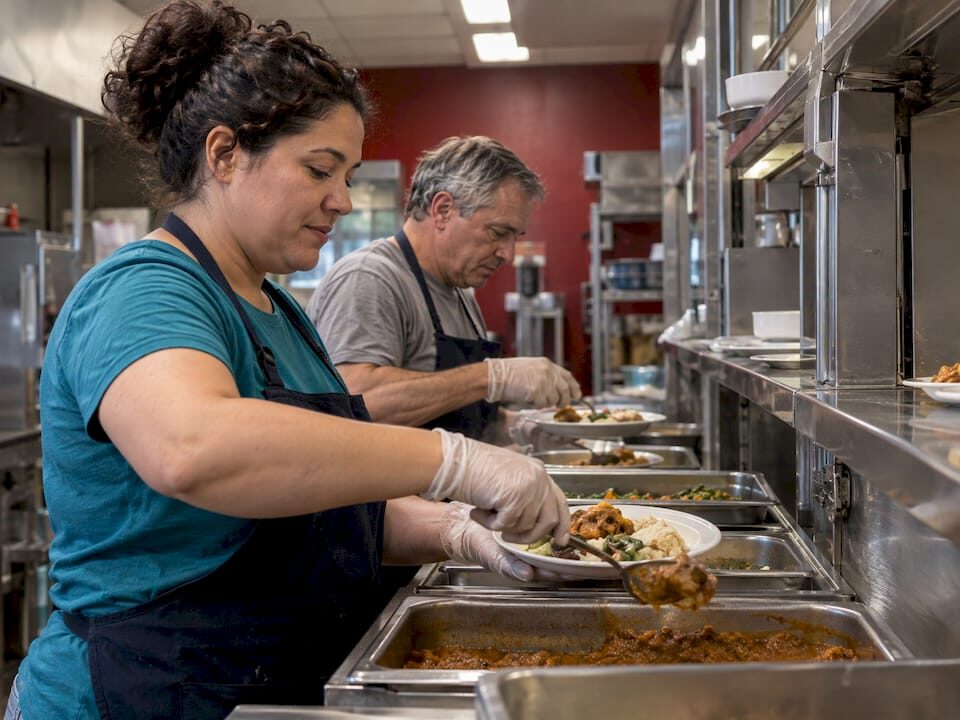
A practical guide to domestic mission trips for churches, youth and college groups: what the work looks like, how to prepare safely, and what NYC trips cost.

We also accept other Non-Traditional Gifts.
Click here to learn more
We also accept other Non-Traditional Gifts.
Click here to learn more
We also accept other Non-Traditional Gifts.
Click here to learn more
We also accept other Non-Traditional Gifts.
Click here to learn more
We also accept other Non-Traditional Gifts. Click here to learn more
We also accept other Non-Traditional Gifts. Click here to learn more

What Christian Missions Are and How to Serve Well
August 27, 2026
Food Pantry Ministry Trips: Why Trained Teams Serve Better
September 3, 2026New York School of Urban Ministry

Lay leaders and volunteers do best with a certificate or ministry school track. Bi-vocational leaders and future pastors typically need a Bible college degree or Master of Divinity for vocational or ordained roles. Whatever your goal, the fastest way to grow as a leader is pairing biblical study with real ministry experience, which is exactly what NYSUM offers through hands-on urban training. Start by naming your goal, then pick the pathway built for it.
TL;DR:
- Short-term certificates are ideal for personal growth or volunteer roles and can be completed in a few weeks to months without significant investment.
- For lay leadership or outreach, accredited certificates or hybrid programs lasting up to a year provide more credible preparation without full degree commitments.
- Vocational ministry roles require a Bible college bachelor’s degree or a Master of Arts, while ordination generally demands a three-year full-time Master of Divinity curriculum.
- Online, hybrid, and residential formats each have trade-offs, but programs that include supervised ministry practice, internships, or outreach trip components produce more competent leaders.
- NYSUM emphasizes hands-on urban ministry training that combines classroom learning with immediate deployment into outreach activities in New York City to foster practical leadership skills.
Ministry training covers everything from a weekend certificate to a full graduate degree, and the right choice depends entirely on where you’re headed. A non-credit certificate is the fastest entry point, often built for personal growth or a specific volunteer role like leading a small group or running a food pantry outreach. An accredited certificate carries more weight for a résumé but usually still takes just a few months.
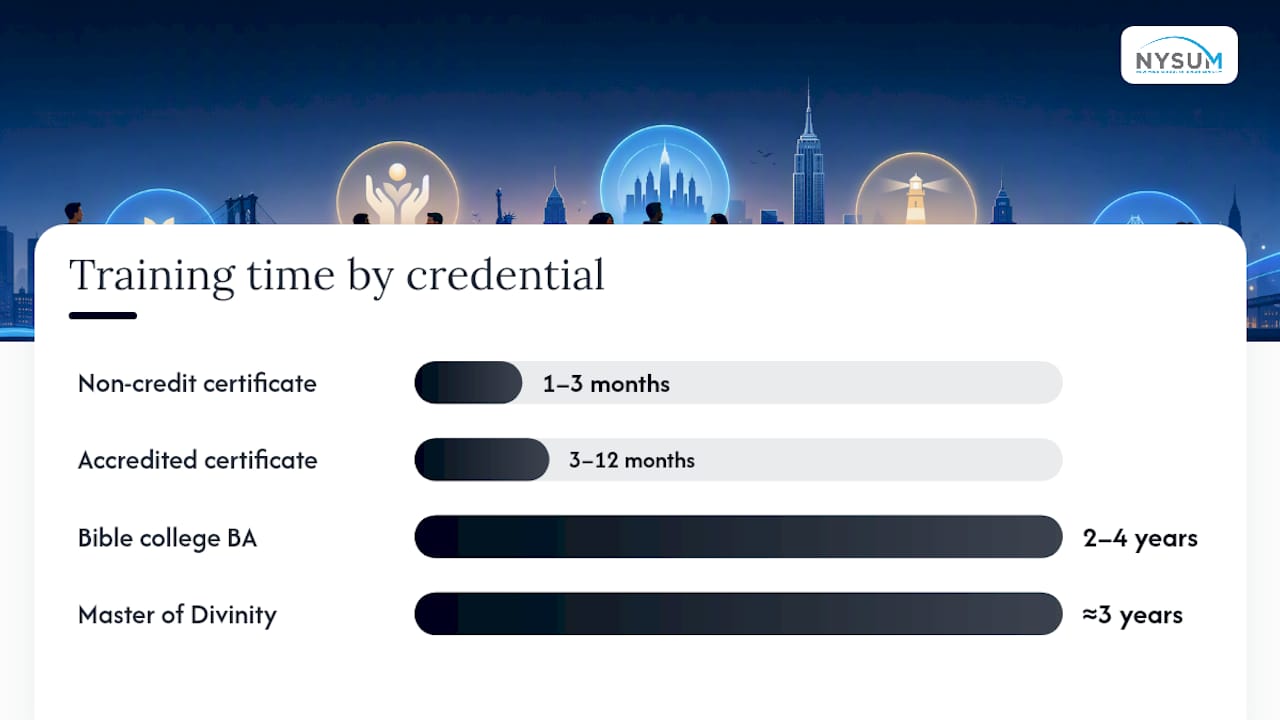
A Bible college degree (typically a BA) gives you a foundational grounding in Scripture, doctrine, and ministry skills over two to four years, and it’s a solid fit for someone stepping into lay leadership or a part-time ministry role. A Master of Arts in ministry or theology deepens that foundation for those who want more academic weight without committing to a full seminary track.
The Master of Divinity is widely regarded as the standard degree for vocational pastoral ministry, typically requiring three years of graduate study and covering preaching, pastoral care, biblical languages, and theology in depth. It’s the credential most denominations expect for ordination.
Here’s how the pathways generally break down by goal:
Free and low-cost certificates fit best at the personal enrichment or entry-level lay leadership stage, giving you a taste of formal training before committing years and tuition dollars to a degree.
Every format trades something for something else. Online programs give you flexibility to keep your job and stay rooted in your local church while you study, but they can shortchange the relational mentoring that shapes character, not just knowledge. Residential programs immerse you fully, but they ask for relocation, tuition dollars, and time away from your current ministry context. Hybrid and intensive short-term programs try to split the difference, packing concentrated learning into weekend or weeklong sessions.
Distance students commonly manage a part-time load of courses per term, often one or two while staying active in local ministry, which makes online study realistic for someone already leading a youth group or serving on a church staff.
Format matters less than what happens inside it. Programs that pair classroom instruction with internships, supervised placements, and real outreach consistently produce more ready leaders than programs built on lectures alone. A few structures make this concrete:
Pro Tip: Before enrolling anywhere, ask how many hours of supervised ministry practice the program actually requires, not just offers. “Available” and “required” are very different commitments.
Matching your role to a pathway keeps you from over-investing or under-preparing.
None of these paths is wasted effort. A certificate today can feed into a degree later, and the sequencing matters more than the label on the diploma.
A strong program shows its work. Look for these signals before you commit money or time:
Ask admissions directly: How many supervised ministry hours are required? Who supervises field placements? What do alumni do after graduating? Is financial aid available for non-degree students?
Red flags include vague language about “real-world impact” with no specifics, zero field opportunities, and faculty pages with no ministry background listed at all.
NYSUM builds its entire model around one idea: ministry skill grows fastest when it’s practiced, not just studied. Teams and individuals train on NYSUM’s urban ministry campus in New York City, then move directly into supervised outreach, including street evangelism, prayer walks, children’s programs, and soup kitchen service alongside local church partners.
Training without deployment stays theoretical. NYSUM pairs classroom preparation with same-week outreach, so trainees see how biblical conviction translates into action before they ever leave the city.
The scale backs it up. NYSUM trains a substantial number of people annually and has served many meals through its outreach initiatives. A typical next step looks like booking a short-term trip, training alongside NYSUM staff, then serving directly in community outreach programs across the five boroughs.
If you’ve read this far weighing certificates against degrees, here’s a more immediate option: hands-on formation you can start booking now. NYSUM specializes in short-term mission packages that combine practical training with live outreach across New York City, built for church groups, youth organizations, college ministry teams, and individuals who want ministry experience that sticks rather than another semester of theory.
Programs run through NYSUM’s urban ministry training campus, where teams train, then deploy into food outreach, street evangelism, and children’s programs the same week. Packages are built for groups of varying sizes, and lodging and meals are included for teams traveling from outside the city. Browse ministry package options to see current pricing and available dates, or start with the NYSUM overview to understand the full scope of what a trip includes. If your church or ministry team is ready to move past planning and into practice, request dates for your group’s trip today.
Head knowledge alone doesn’t make a minister. Neither does heart passion without direction. Ministry readiness grows where biblical study, a formed character, and actual practice meet, and too many training paths only build one or two of those three. That’s why NYSUM structures every trip around training first, then immediate deployment into real outreach. Trainees don’t just discuss compassion ministry in a classroom. They serve soup kitchen lines, walk city blocks in prayer, and lead children’s programs the same week they learn the biblical foundation behind each one. If you’re weighing where to invest your next season of growth, reach out through NYSUM’s training campus page and see what a formation-first approach looks like in practice.
— NYSUM
Ministry training is structured preparation for serving in church or community leadership, ranging from short certificates to graduate degrees like the Master of Divinity, and the strongest programs combine biblical study with supervised, hands-on ministry practice.
Definitions vary by denomination and author, so there’s no single agreed-upon framework; if you encounter this phrase in a specific program’s materials, ask that program directly what it means in their context.
Lists vary across traditions, but common categories include pastoral care, teaching, evangelism, worship leadership, discipleship, administration, and outreach or compassion ministry, each requiring different training emphases.
Several seminaries and theological centers offer free or low-cost non-credit courses, often priced around $100 per course and open to learners without a degree prerequisite, making them a solid entry point before committing to a full program.
Tel: 718.204.6471 | Email: info@nysum.org
This website uses cookies
We use cookies to personalise content and ads, to provide social media features and to analyse our traffic. We also share information about your use of our site with our social media, advertising and analytics partners who may combine it with other information that you’ve provided to them or that they’ve collected from your use of their services.
Cookies are small text files that can be used by websites to make a user's experience more efficient.
The law states that we can store cookies on your device if they are strictly necessary for the operation of this site. For all other types of cookies we need your permission. This means that cookies which are categorized as necessary, are processed based on GDPR Art. 6 (1) (f). All other cookies, meaning those from the categories preferences and marketing, are processed based on GDPR Art. 6 (1) (a) GDPR.
This site uses different types of cookies. Some cookies are placed by third party services that appear on our pages.
You can at any time change or withdraw your consent from the Cookie Declaration on our website.
Learn more about who we are, how you can contact us and how we process personal data in our Privacy Policy.
Please state your consent ID and date when you contact us regarding your consent.